The non-writer Pánfilo de Narváez
- vesmiths
- Nov 14, 2025
- 2 min read
Updated: Dec 4, 2025
I asked this question of my recent acquaintance, Mr. Chat GPT: “Who are the best-known Spanish explorers in American history, in order of their notoriety?”
Here’s the list in order, based on surveying the Web:
1. Christopher Columbus
2. Hernán Cortés
3. Francisco Pizarro
4. Ferdinand Magellan
5. Juan Ponce de León
6. Francisco Vázquez de Coronado
7. Hernando de Soto
8. Vasco Núñez de Balboa
9. Álvar Núñez Cabeza de Vaca
Wikipedia provides a very long list of explorers, their nationalities, and locations they explored, starting with the Egyptian Nehsi in the 15th century BC and including American astronauts. Cabeza de Vaca is there, described as having explored the future United States, Mexico, and Argentina—the latter as leader of his own expedition, following his Narváez experience. Interestingly, the only Narváez mentioned in this list is José María Narváez, a 19th-century Spanish naval commander who explored the Pacific Northwest and served in the Mexican War of Independence. I think Pánfilo de Narváez has been slighted, since he did lead the first major expedition through central to northern Florida and along the entire northern Gulf Coast before it ended disastrously on the coast of Texas. But unlike other conquistadors, he seems to have left no personal record of his career or other writings about himself, according to Chat Gpt. Apparently, he was not a literary kind of guy. All we know about him comes from the Cabeza de Vaca account of his expedition and from the writings of other contemporaries. Although Narváez seemed to imagine himself becoming a great figure in the history of conquests, he was content to let others define his legacy.
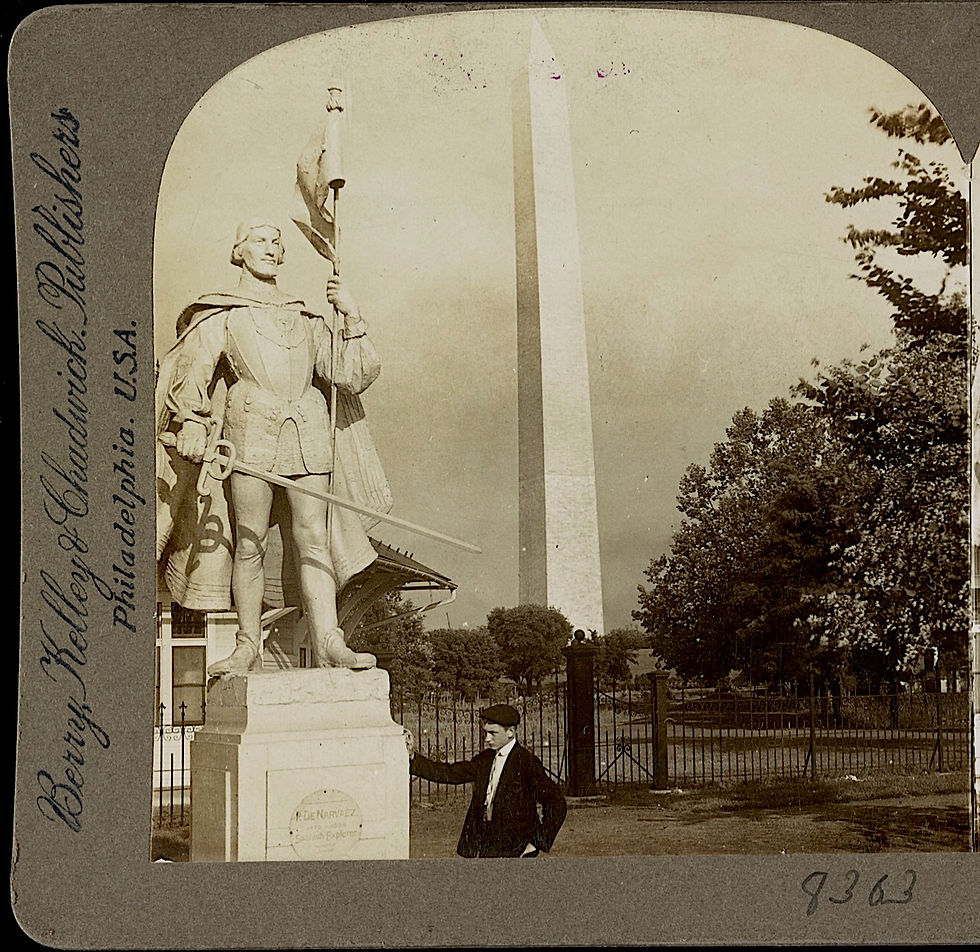
Interestingly, in 1906 a rather heroic statue of Pánfilo de Narváez stood near the Washington Monument, along with one of Andrew Jackson. Yes, Narváez—not Christopher Columbus, Juan Ponce de León, or Hernando de Soto! Back then at least, his expedition must have been considered an important milestone in the founding of America. And what did those historians of 1906 think Narváez and Jackson had in common? Well, they were both authoritarian, vain, impetuous, and bent on conquest and glory. Does that ring any bells today?



Comments